
St. James Parish Criminal Court Cases
The Twenty-Third Judicial District Court has original criminal jurisdiction in St. James, Ascension, and Assumption Parishes. Its six judges serve Divisions A through F across that three-parish district. At the Convent courthouse, the court hears St. James Parish felony matters and state-law misdemeanors. The division label identifies a districtwide judicial assignment, not six separate local criminal courts.
The St. James Parish Clerk of Court is custodian of each filed criminal case. That file begins when the district attorney files a bill of information or a grand jury returns an indictment. It then gathers minutes, motions, hearing entries, pleas, judgments, and sentencing papers. A town ordinance or traffic summons from Lutcher or Gramercy may instead belong to a mayor's court, so first identify whether the desired matter is a state prosecution, a town docket, or an agency report.
St. James Criminal Desk Search
There is no advertised public name-search database for St. James Parish criminal court cases. Call the clerk's criminal desk at 225-562-2389 or 225-562-2271. Give the person's full name, an approximate filing or arrest year, and a docket number if known. Ask whether the file is onsite, archived, or available in any remote form. Starting with the docket sheet and minutes is efficient because those records identify the documents and court events that actually exist.
The St. James Parish Clerk of Court lists the criminal contacts and serves as the direct court-file source.
The clerk page is the sound starting point when an online search result cannot establish a case outcome.
Searching St. James Parish Case Records
A complete St. James Parish case search uses the clerk rather than a statewide public trial-court portal. Prepare a narrow inquiry, then confirm the caption and docket before paying for copies. The clerk does not publish a separate criminal copy or search fee, so ask for the current amount, accepted payment method, and certification charge before ordering.
- Call the St. James criminal desk or visit the clerk counter at the Convent courthouse.
- Provide the full name, approximate year, and docket number if one is already known.
- Ask staff to distinguish active, closed, onsite, archived, and any remotely viewable material.
- Request the docket sheet and minutes first, then identify the charging paper, disposition, and sentence.
- Specify plain or certified copies and confirm the current cost and delivery method.
| Search Detail | Format | Required | Use |
|---|---|---|---|
| Full name | Text | Yes | Primary clerk lookup detail |
| Approximate date or year | Date | No | Narrows similar names and archives |
| Docket number | Text | No | Most precise route to one case |
| Requested document | Text | No | Identifies minutes, judgment, or sentence |
| Certification need | Choice | No | Separates plain from certified copies |
Criminal Dockets Are Not Land Records
The clerk's records and remote-access page describes its public online search as conveyance and mortgage access. It does not promise a public criminal-name portal. Do not enter a person's name in the land-record tool and treat no result as proof that no criminal case exists. The proper fallback is the criminal desk, where staff can check the court index and explain available copy channels.
Louisiana's recent remote-access and e-filing changes do not erase that local distinction. As of the research date, the St. James public page still labels the remote product by land-record scope. Verify criminal image availability with the clerk rather than assuming every filing is online.
The official records page makes that scope visible.
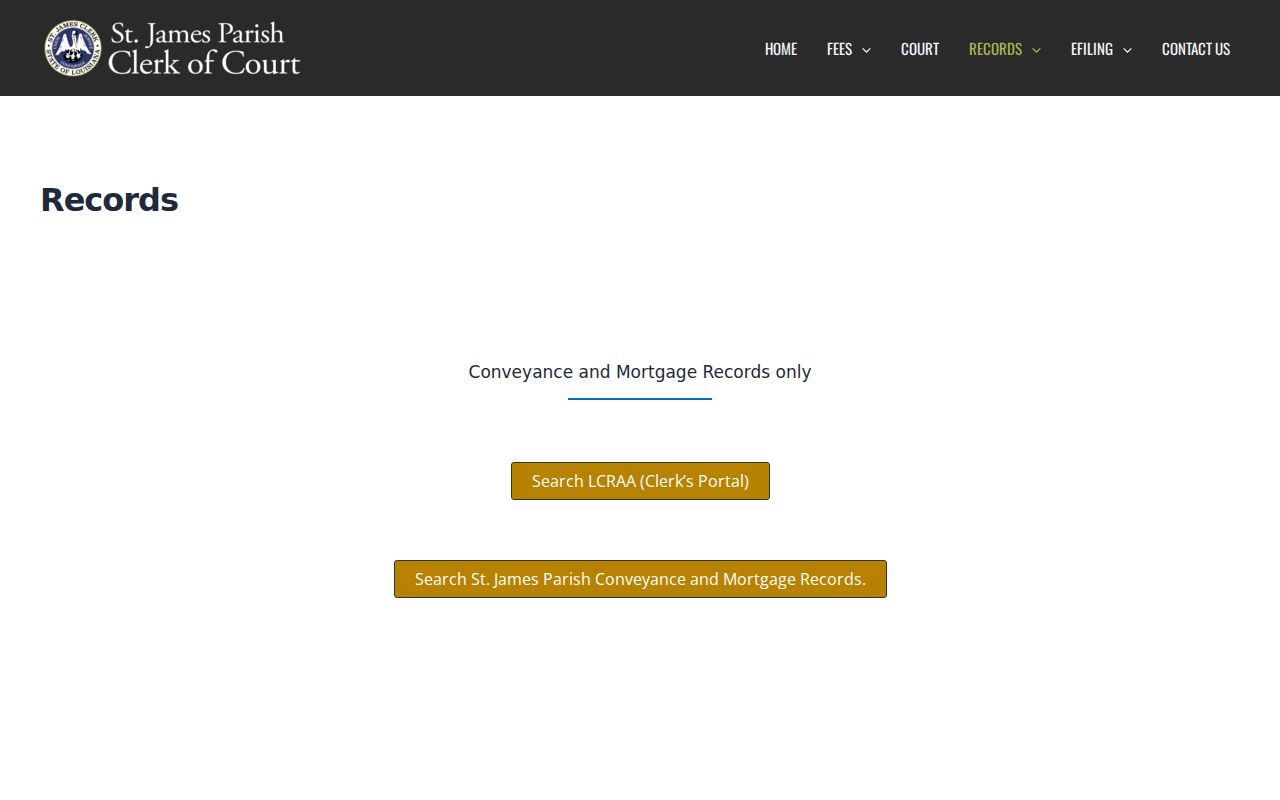
This distinction prevents a land-record search from being mistaken for a criminal case clearance.
Inside a St. James Parish Case File
A case file answers what prosecutors filed and what the court decided. It may differ from the original booking record because the district attorney can reject, add, reduce, or amend allegations. Read the charging instrument and final disposition together. A docket entry alone can show that an event occurred, while the linked judgment or minute entry supplies the result.
| Case Number & Court | Docket number, State v. defendant caption, division, judge, and filing date. |
|---|---|
| Charging Document | Bill of information or indictment with filed charges and cited statutes. |
| Docket Entries | Motions, counsel entries, bond events, minutes, and financial entries. |
| Hearing Dates | Arraignment, motion, trial, and other scheduled or completed court events. |
| Disposition & Judgment | Dismissed or amended counts, plea, verdict, acquittal, and final judgment. |
| Sentence & Conditions | Sentence, probation, fines, costs, restitution, and related orders. |
A Louisiana rap sheet and a St. James Parish criminal case file are not the same record. LACCH may link fingerprint-based arrest cycles and reported outcomes, while the clerk file holds the court documents that explain the local prosecution.
Reading St. James Court Terms
A bill of information is the district attorney's formal charging document. An indictment is a grand jury's charging instrument. Arraignment is the hearing where the charge is stated and a plea is received. A disposition is the case outcome. “Nolle prosequi” means the prosecutor declined to continue a count, while a “no bill” means the grand jury did not indict on the presented charge.
Louisiana does not use one universal Class A, B, or C grid. A felony is an offense punishable by death or imprisonment at hard labor; other crimes are misdemeanors, including penal ordinances. Read the literal statute on the St. James Parish docket. “Hard labor” signals felony status but does not, by itself, state the final sentence.
The Louisiana criminal procedure index provides the current procedural and expungement articles.
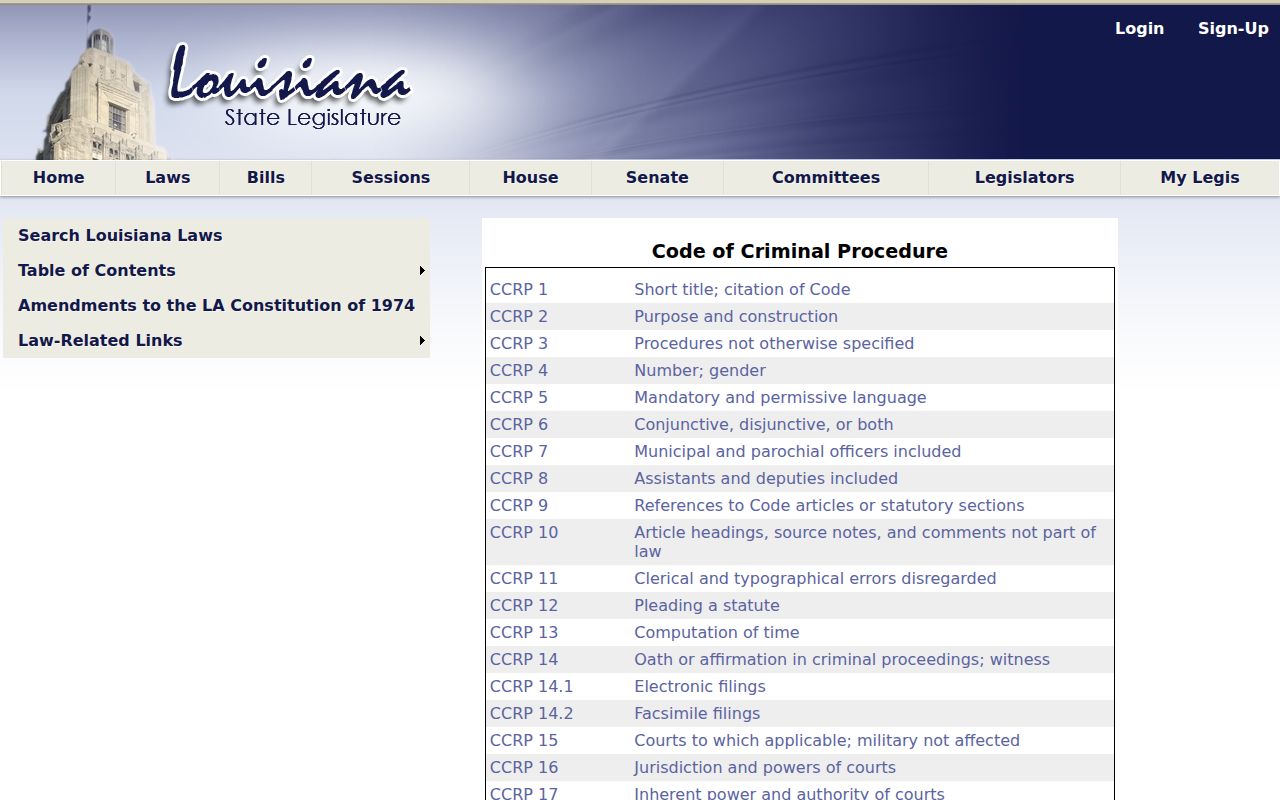
The official code is the best check when a docket abbreviation depends on a procedural rule.
How a St. James Criminal Case Moves
An arrest begins an agency and jail record, but the court case begins with a filed charge. The district attorney decides what to prosecute. At arraignment the accused enters a plea. Pretrial motions and hearings follow, then a plea or trial resolves the charge. The clerk records the disposition and sentence. That sequence explains why a recent booking allegation may not yet match a court docket.
Case flow: Charges Filed › Arraignment › Pretrial › Plea or Trial › Disposition › Sentencing
Probation and parole records add another layer after judgment. The Donaldsonville District Office serves St. James Parish, but supervision notes, tests, and medical details should not be assumed public. For the sentence imposed, return to the clerk's judgment and minutes.
St. James Copies and Archives
Ask whether a plain copy will meet the need or whether a certified copy is required. Certification authenticates the clerk's copy. The clerk's published recording-fee page does not state a criminal copy price, so a safe request asks for a quote rather than borrowing a land-record fee. The official fee and contact page is useful for reaching the office, not for inventing an unpublished criminal charge.
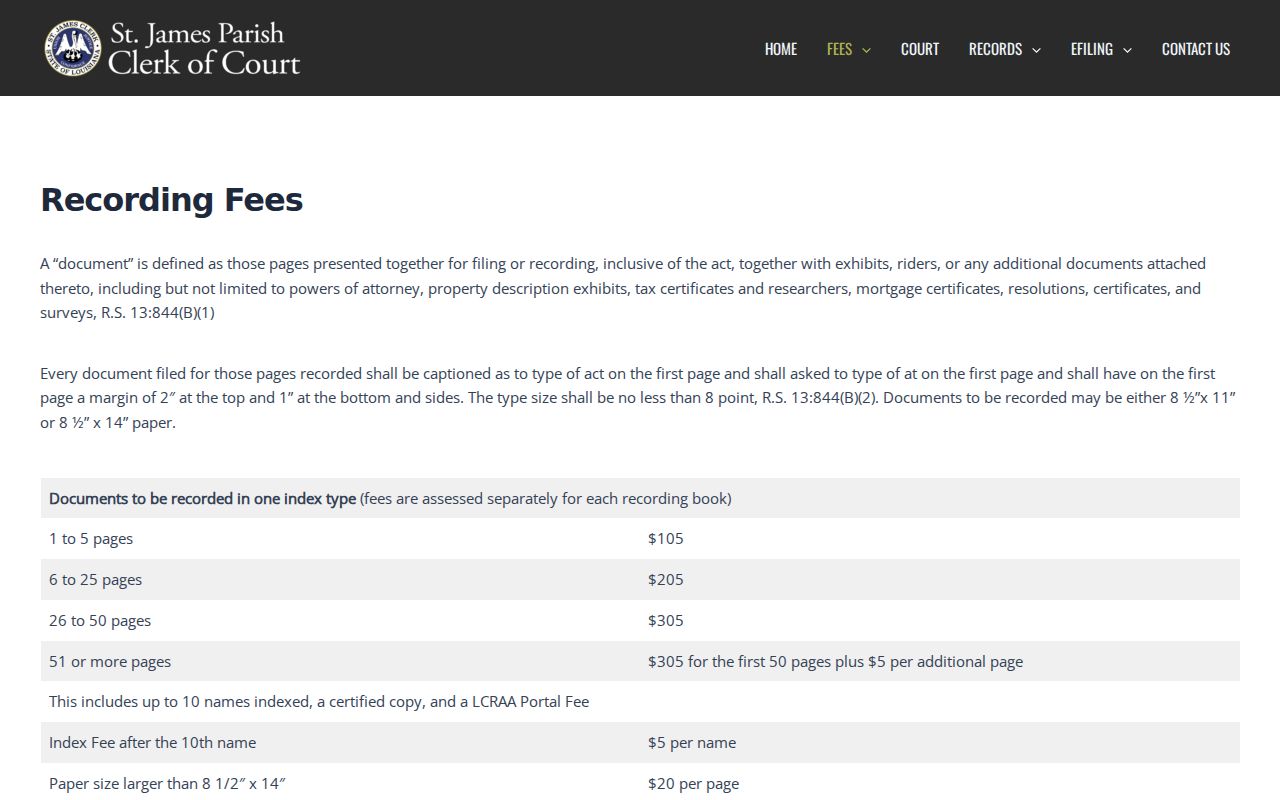
The source supports direct confirmation of criminal copy and certification costs.
Older St. James Parish case files may predate the present courthouse and modern electronic indexing. The former courthouse burned in 1970, and the current building opened on the same site in 1971. Give staff a broad enough year range, former names, and any known charge or court detail. An archived-file inquiry may take a different route from a current docket request.
District 23 Defense Records
The District 23 public defender serves the same three-parish district. Its St. James location is on the courthouse third floor, while headquarters is in Gonzales. The office reported 3,717 people represented across eight courts and seven divisions in 2025. That districtwide figure provides workload context, but it is not a count of St. James criminal court cases.
The District 23 public defender page lists its offices and assignment structure.
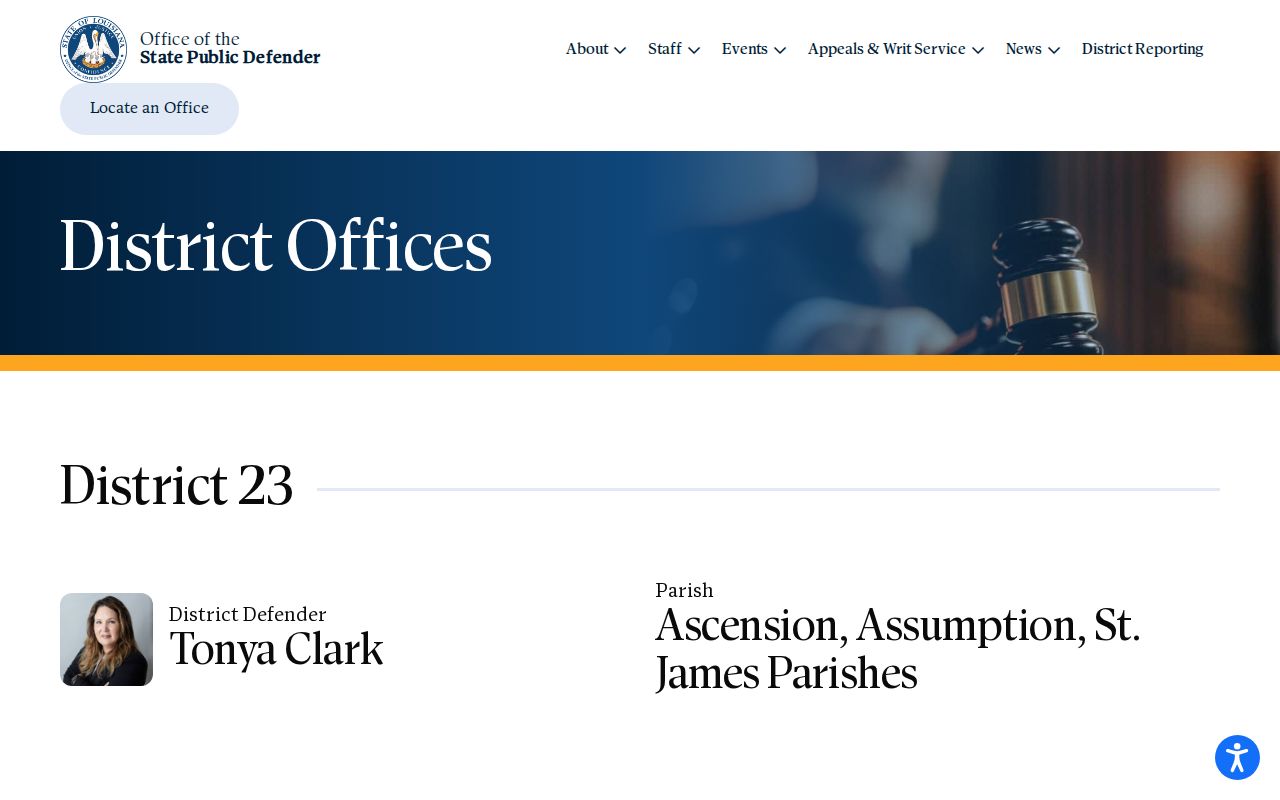
Defense-office materials are not a substitute for the clerk's public docket, but they help explain the district's court structure.
Case Record Access & Restrictions
Code of Civil Procedure article 251 makes the clerk custodian and permits inspection, copying, or photographing of public court records during office hours unless law or court order closes them. It also restricts privately owned scanning or copying equipment in the clerk's office without a court order. Call before bringing equipment.
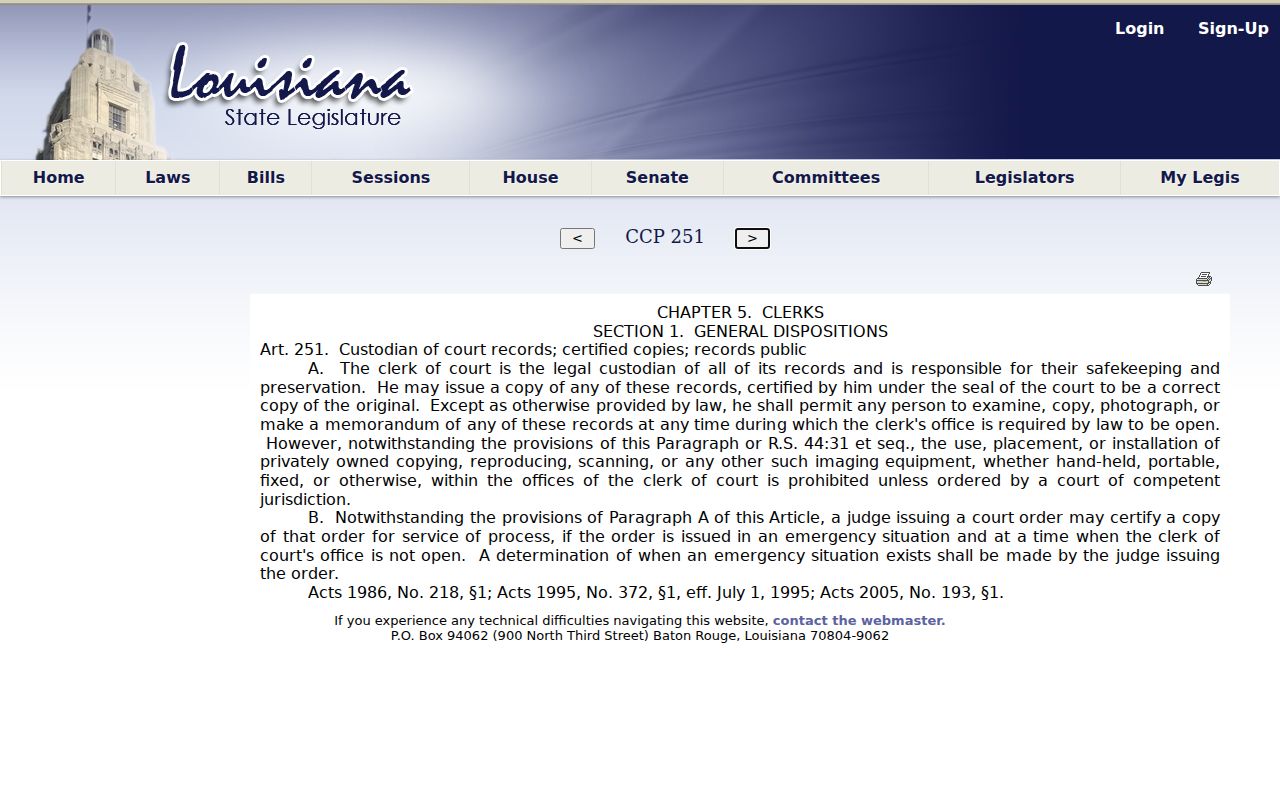
The statute supports access to open files while preserving lawful closures and office controls.
Juvenile records are generally confidential. Expunged records are removed from public access but not destroyed, and victim, minor, Social Security number, date-of-birth, and sealed material may be hidden. If a St. James Parish case does not appear, ask the clerk whether the cause is spelling, age, archive status, an order restricting access, or the fact that no charge was filed. A booking record cannot supply the missing court outcome.
Louisiana Public Records Law supplies a broad access baseline, but the court-file rule and specific confidentiality laws control the actual document. Investigative reports held by the sheriff can remain restricted even when a charging paper and judgment at the clerk are open. Grand-jury deliberations remain secret though an indictment becomes part of the filed case. This custodian-by-custodian split matters in St. James Parish: request the filed motion, minute, disposition, or sentence from the clerk; request a segregable public incident or booking record from the law-enforcement custodian.
An expungement order changes public visibility without erasing all government access. Louisiana Code of Criminal Procedure articles 971 through 995 govern that process. The motion is filed in the court that holds the underlying cause, normally the 23rd JDC for a St. James state case. Eligibility depends on the result, offense, waiting period, and current law. Never infer eligibility from a blank public search. Confirm the docket and consult the current articles or qualified counsel.