
Checking Criminal History in Gramercy
Begin with the agency that made the record. Gramercy Police can address a town incident report, while Amy O. St. Pierre, the town clerk, is the practical contact for a Mayor's Court docket or other municipal file. A booking after a Gramercy arrest belongs to the St. James Parish sheriff, and a felony or state-law misdemeanor filed for prosecution belongs to the clerk of the 23rd Judicial District Court. Louisiana does not offer a public, statewide name search through LACCH. Only the subject can use the fingerprint-based Right to Review route for a personal repository record.
- Ask Gramercy Police whether town officers created the incident or citation.
- Give the date, location, names, report number, and desired copy format if known.
- Contact the town clerk for a Mayor's Court summons or docket entry.
- Use the parish roster and clerk for bookings and state criminal cases.
- Use Louisiana State Police Right to Review for your own statewide record.
A broad request can cross several offices. Narrowing it by event and record type saves time and helps each custodian identify material that can be released.
Gramercy Police Record Contacts
Gramercy publishes direct contacts rather than a dedicated police-record form. Police Chief Dustin J. Jenkins can be reached at 225-806-3431 or djenkins@gramercypd.com. Clerk Amy O. St. Pierre is available at amyp@townofgramercy.com, and Town Hall is at 120 N. Montz Street, Gramercy, LA 70052. Mail may go to P.O. Box 340. The main number is 225-869-4403 and the fax is 225-869-4195.
The official Gramercy administration page identifies the current town officers and contact channels.
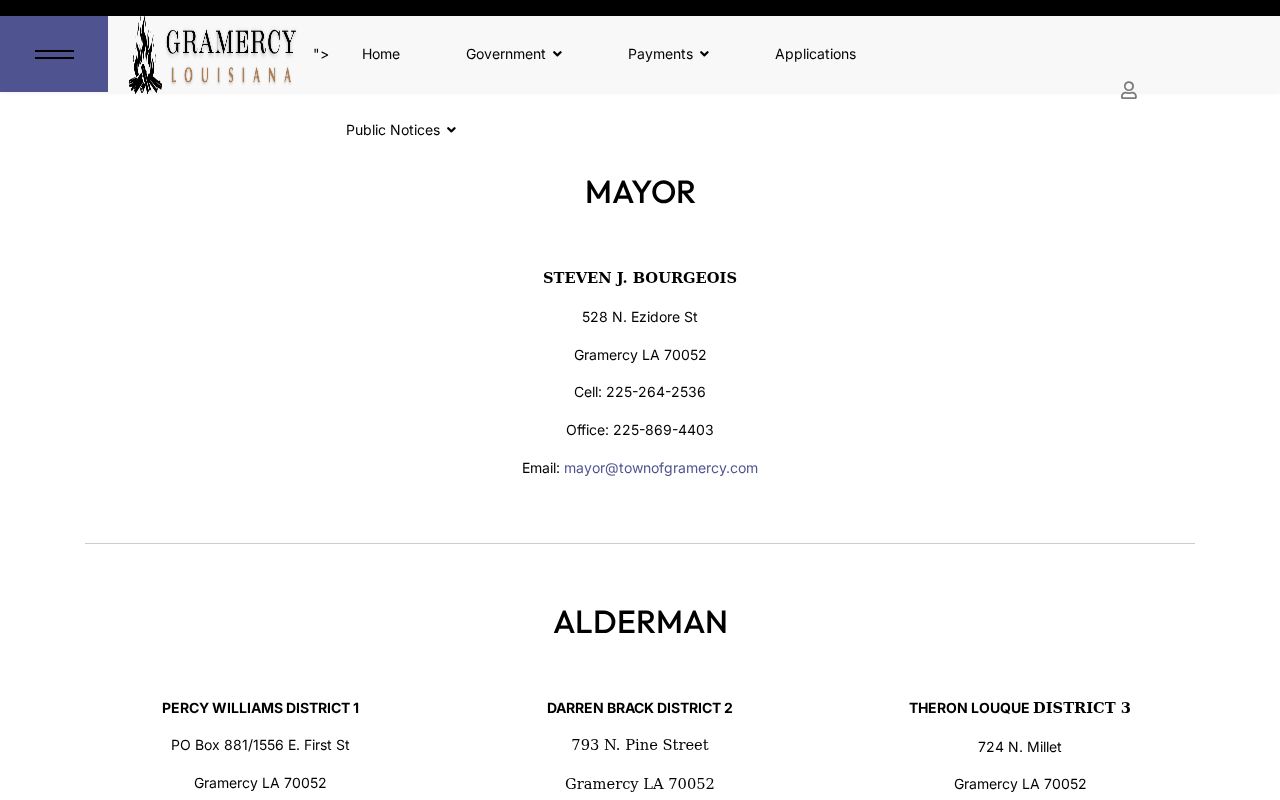
That official listing supports a direct police inquiry with the clerk as the municipal-record fallback. Counter hours are Monday through Thursday, 7:30 a.m. to 4:00 p.m., and Friday, 8:00 a.m. to noon. No published fee table or mandatory request fields were found, so confirm cost, certification, delivery, and redaction before sending payment.
Gramercy Police Department Records
Gramercy Police records may include an incident sheet, citation, property information, or an arrest report created by a town officer. They do not automatically include the later court outcome. Ask for the exact record needed and whether the chief or another employee is the legal custodian. Useful identifiers include an incident date and time, location, involved names, report or citation number, and the requested medium. These details are recommendations, not town-published prerequisites.
The sheriff's official Crime Reports service also aggregates complaints attributed to Gramercy Police, Lutcher Police, and the sheriff.
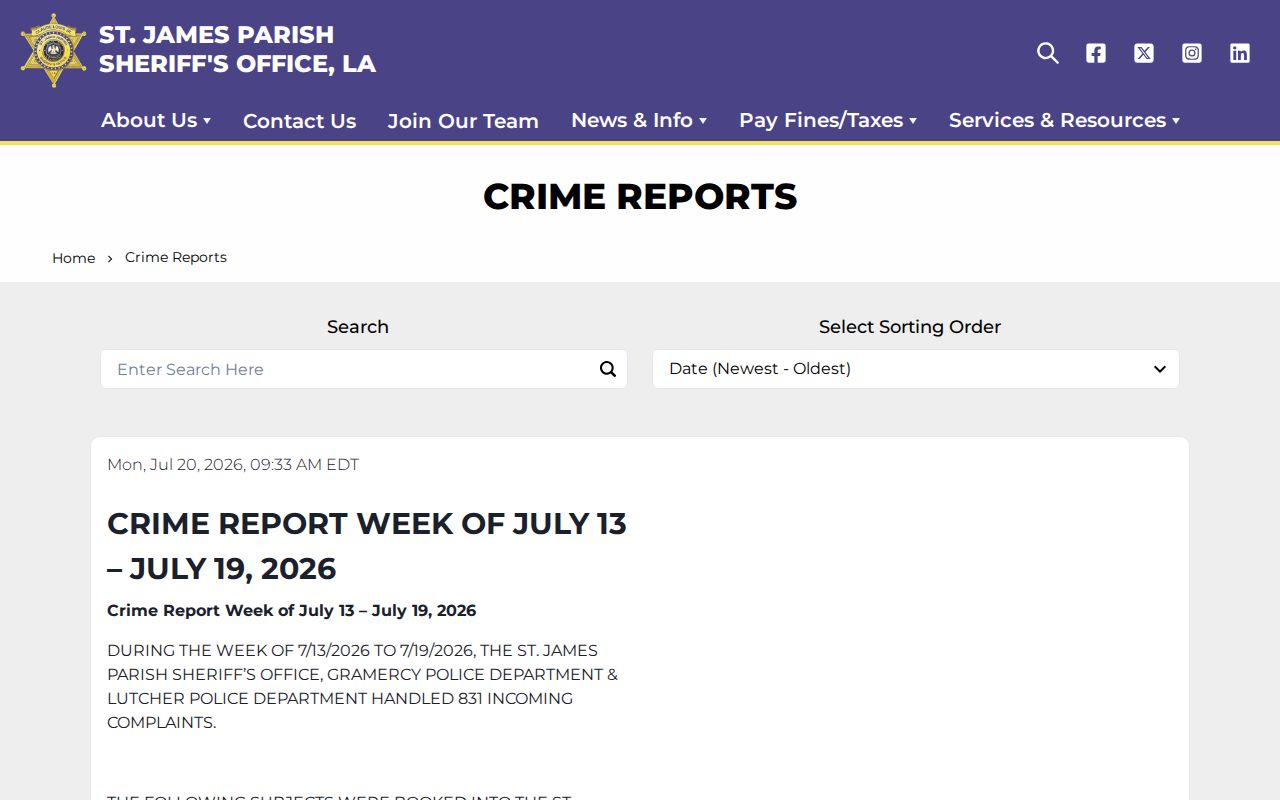
The list is searchable and sortable, loads ten items at a time, and starts with newer entries. It is an incident index, not a person's complete criminal history. A listed complaint does not establish a charge or conviction.
Reading Gramercy Police Snapshots
Town minutes add useful context but must be read on their own terms. January 2026 minutes recorded ten minor holiday calls, aid to another agency on Christmas Eve, and a gas-main incident coordinated with the parish emergency office, sheriff, and volunteer fire service. November 2023 minutes described school-safety, seatbelt, bullying, and D.A.R.E. work. June 2024 minutes noted four blight or code summonses.
These are monthly operational snapshots. They are not annual crime totals, and they should not be added together to produce a rate. For annual statistics, use the FBI Crime Data Explorer, select Gramercy Police and a year, then check whether the agency reported complete data. Missing data is not zero crime.
The records also illustrate how varied town police work can be. A school program may create an administrative entry but no criminal case. A blight summons may produce a Mayor's Court docket without a booking. Emergency aid can generate reports at more than one agency. Searchers should use the date, address, responding agency, and record number to separate those files. When several offices took part, ask each custodian for the record it created instead of assuming one report contains the entire event.
Note: Town minutes can explain a local event, but only the responsible custodian can supply its underlying report or final court result.
Gramercy Arrests and Bookings
No official city jail was identified for Gramercy. When an arrest results in continued custody, check the St. James Parish sheriff roster or call the detention center at 225-562-2504 or 225-562-2505. The roster offers keyword search and sorting, defaults newest-first, and displays ten entries at once. Its feed can show the name, booking photo, inmate ID, physical descriptors, custody and booking timestamps, reporting agency, and charge code or description.
The inspected feed did not show bond, warrant number, court date, magistrate, housing unit, or projected release date. A blank or absent result can reflect release, transfer, spelling variation, or a feed delay. It does not prove there was no Gramercy arrest. The broader St. James Parish arrest lookup explains the jail and custody channels without treating an allegation as guilt.
A Gramercy summons can remain a town-court matter and may never create a jail booking. That distinction is especially important in code and traffic cases.
Gramercy Online Reporting Routes
The official Police-to-Citizen route provides a digital starting point for reports handled through the parish public-safety system. Its live fields could not be verified during research because the application blocked automated inspection. Do not assume it accepts a records request, displays every Gramercy case, or replaces a call to the chief.
The official Police-to-Citizen portal is the correct place to confirm its current functions.
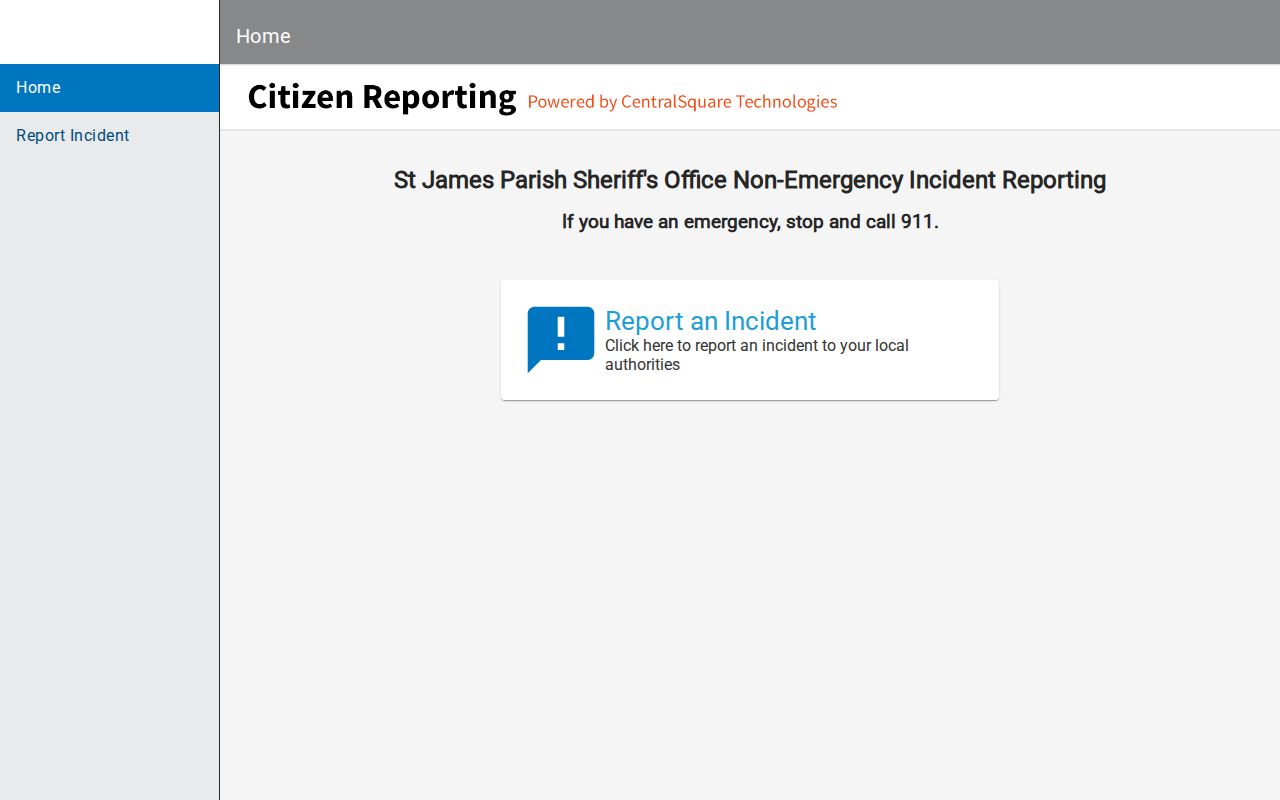
If the application does not load or lacks the needed option, contact Gramercy Police for a town report and the sheriff for a sheriff-generated report. The sheriff's official public-safety app also advertises tips, news, alerts, and crime reporting. It is not for emergencies.
The official St. James Parish Sheriff app listing shows its publisher and advertised features.
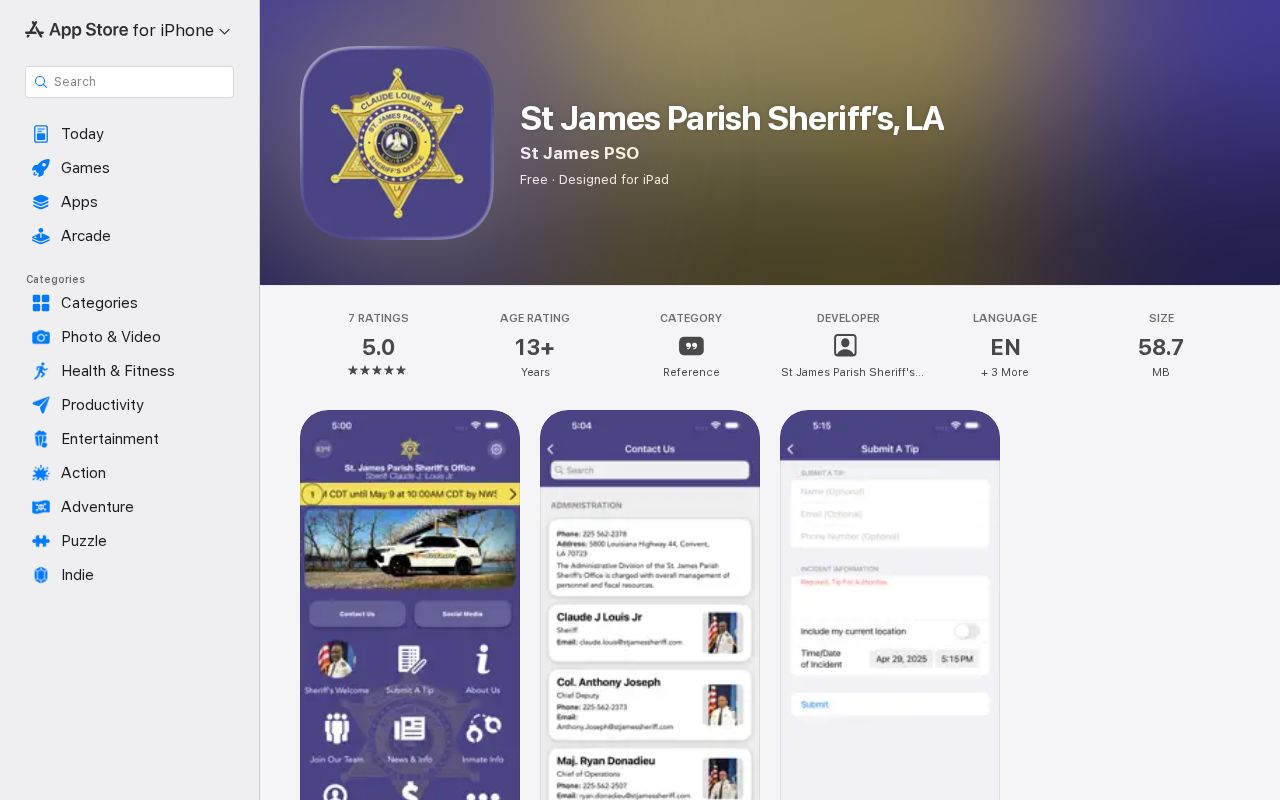
The listing confirms a mobile route for public-safety contact, but it does not establish that every tool returns a municipal record.
Municipal Court Records in Gramercy
Gramercy Mayor's Court hears town-ordinance violations, local traffic matters, and code summonses. Louisiana R.S. 33:441.29 authorizes a magistrate for this court. No online docket was located. Call or email the town clerk with the legal name, summons or citation number, and an approximate date. Ask whether the desired item is available for inspection, as a plain copy, or as a certified copy.
| Court Name | Gramercy Mayor's Court |
|---|---|
| Case Types Heard | Town ordinances, local traffic matters, and code summonses |
| Case Lookup Channel | Town clerk by phone, email, mail, fax, or counter; no online lookup found |
| What the Docket Shows | Case activity and disposition maintained for the municipal proceeding |
| Copies & Fees | Inspection and copies by request; no town court fee schedule was located |
A police report and a Mayor's Court docket answer different questions. The report describes the officer's investigation. The docket records what the town court did with a citation or ordinance charge.
When Gramercy Cases Leave Town
Mayor's Court does not replace the 23rd JDC. Felonies and state-law misdemeanors are filed in the district court at Convent, and the St. James Parish Clerk of Court keeps the docket, minutes, pleadings, disposition, and sentence. Call the criminal desk at 225-562-2389 or 225-562-2271 with the name, approximate year, and docket number if known.
A booking allegation can change before filing. The district attorney may reject, add, reduce, or amend a charge. For that reason, the police report cannot prove the final court outcome. The St. James Parish criminal court cases route is the better source for the charging instrument and judgment.
- Summons
- A direction to appear that may not involve custody.
- Disposition
- The result recorded by the court, such as dismissal, plea, acquittal, or conviction.
- Expungement
- Removal of covered records from public access without destroying them.
Where Gramercy Records Go
A town officer creates the first incident, citation, or arrest record. Parish jail staff create a separate booking record when they receive an arrested person. If prosecutors file a state charge, the St. James clerk opens the 23rd JDC case. Fingerprint-supported arrest data and later dispositions can then reach the Louisiana Bureau of Criminal Identification and Information.
Record flow: Gramercy Police Department › St. James Parish courts › Louisiana Department of Public Safety, Office of State Police, Louisiana Bureau of Criminal Identification and Information
The newest event may appear first with police or the jail. The most reliable filed outcome is in the court record. A person seeking their own Louisiana repository history must use State Police Right to Review because LACCH is closed to general public name searches.
Gramercy Federal Custody Searches
A local event does not always remain in a local system. A federal prosecution covering Gramercy belongs to the U.S. District Court for the Eastern District of Louisiana, and federal case documents are searched through PACER. Federal custody is separate from the St. James roster and Louisiana VINE.
The Federal Bureau of Prisons Inmate Locator is the official search for a person in federal prison custody.
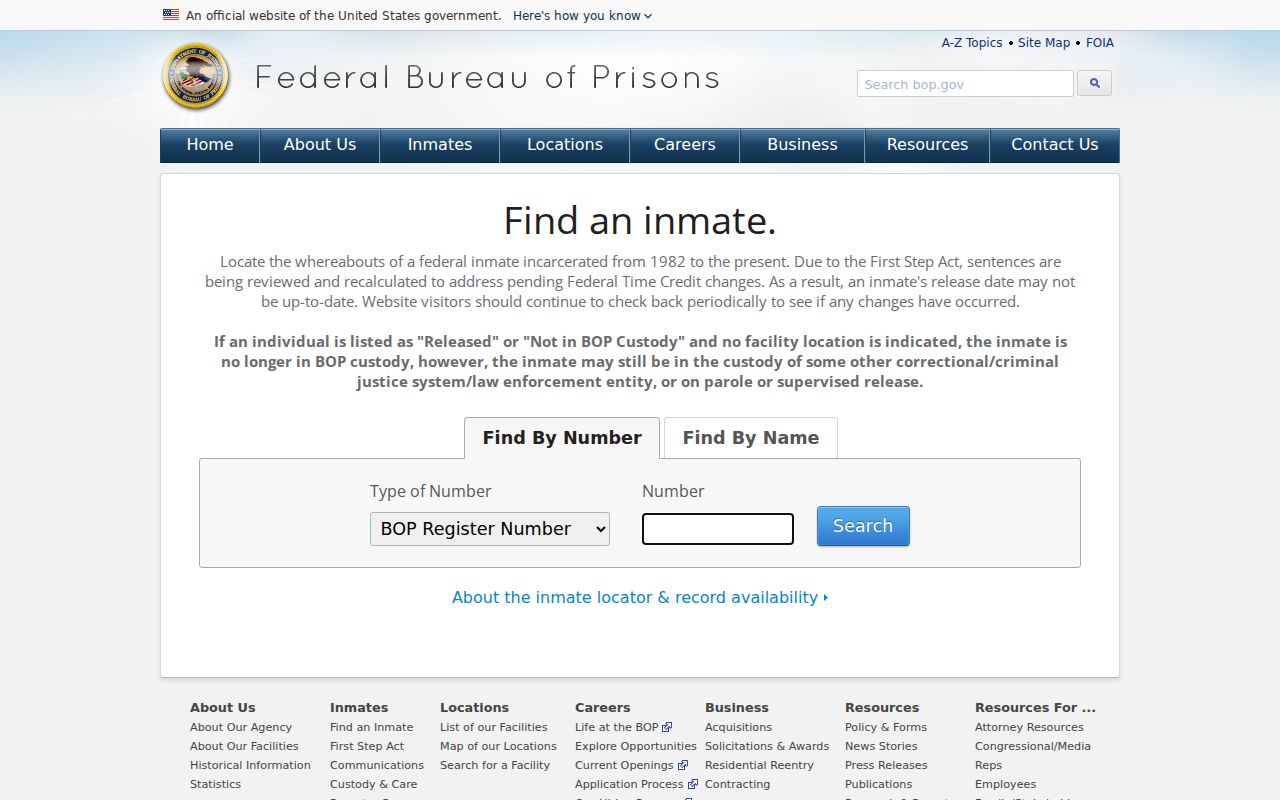
The locator does not return Gramercy police reports, parish bookings, Mayor's Court citations, or 23rd JDC outcomes. Use it only when the custody system is federal.
Gramercy Registration Has Two Stops
Louisiana registration rules can require a resident inside Gramercy to appear with both the St. James Parish sheriff and the Gramercy police chief. Registration can also apply where a person works or attends school. The general deadline is within three business days of establishing Louisiana residence or release, subject to the current statute and court order.
Registrants generally provide two proofs for each address. The annual fee is $60 to each appropriate registering agency at initial registration and anniversaries, although indigency can matter. Gramercy does not publish dedicated counter hours or a payment method for this task, so call the chief and sheriff before appearing. Public searches belong through the Louisiana State Police registry or NSOPW, not through a general town criminal-record portal.
Note: Registration data is for safety awareness; verify it with the registry or responsible agency and never use it to threaten or harass anyone.
Public Access Rules in Gramercy
The Louisiana Public Records Law broadly covers records used in public business, but access remains subject to exceptions. Active investigative and prosecutive material may be withheld. Juvenile files are generally confidential. A custodian may redact protected identities, methods, security details, or other exempt content while releasing a segregable public part. Requesters should therefore ask for a basic incident sheet, property information, citation, or adjudicated record instead of demanding an entire investigative file.
Court records follow a separate custody rule. The clerk may allow examination, copying, or photography during office hours unless the file is closed. Expungement makes covered records confidential to the public but does not destroy them.
Key Statutes:
Louisiana Public Records Law, R.S. 44:1 defines public records broadly, subject to lawful exceptions.
Louisiana R.S. 44:3 protects specified law-enforcement and prosecutive material.
Code of Civil Procedure art. 251 makes the clerk custodian of public court records and governs inspection and copying.
A denial or redaction should identify its legal basis. Ask whether a narrower request or release after adjudication would produce a public portion.